
My Bolivia trip happened completely by accident and I loved (almost) every second of it.
I wasn’t planning on going to Bolivia, until I met two girls at my hostel in Chile. They were heading to the Atacama desert in the north, to cross into Bolivia and convinced me to join them. I said yes, mostly because I had nothing planned for after Chile anyway. I hadn’t read into Bolivia at all and had no idea what amazing adventures would await me on the other side of the border.
It turned out to be one of my better decisions. Out of every country I’ve ever visited, Bolivia still sits at number one, tied with Sri Lanka. The nature is breathtaking, the people are extremely warm and it feels nothing like anywhere else.
Most people skip it, usually because of the altitude. If that’s you I would suggest you reconsider. You’re missing out on an experience you won’t forget. Before we get into it, here’s some basic facts:
| Capital | Sucre (official) and La Paz (where everything actually happens) |
| Languages | 36 official languages. Spanish is the main one, but Quechua and Aymara are spoken widely too |
| Currency | Boliviano (BOB) |
| Visa | Most Western passport holders get in for free, up to 90 days |
| Good to know | Most of the country has an altitude of 3,500+ metres. |
| Climate | Jungle heat in the north, freezing cold in the highlands |
| Highlights of a Bolivia trip | Uyuni Salt Flats, Sucre, Rurrenabaque Jungle, Lake Titicaca, ToroToro |
Culture & People
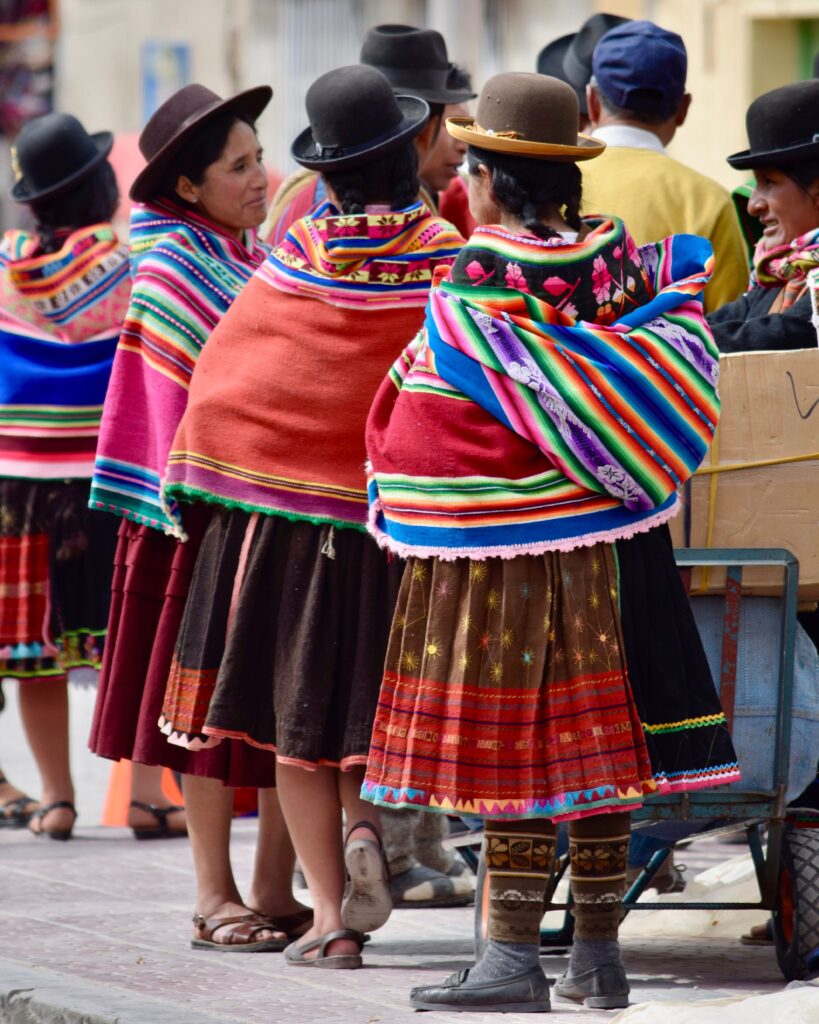
Here’s the thing about a Bolivia trip: most people skip it because of the altitude. The fact that tourism hasn’t taken over here, is exactly why it’s still so special. There’s no Starbucks on every corner, no overpriced “tourist menus” or fake attractions. What you get instead is the real thing and you will feel it immediately.
Near Sucre, we visited a local market. Someone pulled us aside before entering and told us to not take photo’s of people, nor animals. The belief is that when you take a picture of a living being, you take half of its soul with it. It’s important to be aware of cultural norms and adapt to them. Things that are normal to you, might be something very different to others.
There were other moments that showed me exactly what Bolivian culture is made of. Walking through Sucre one afternoon I noticed a homeless man sitting on the street while families with kids passed by. Instead of steering their children away from him, the parents quietly handed their kids a few coins to give to him themselves. Generosity and looking out for others is within their culture and is taught to kids from a very young age.
Bolivia has 36 officially recognised languages which tells you everything about how diverse this country really is. Spanish works fine in the cities but once you get off the beaten track you’ll hear Quechua and Aymara pretty much everywhere. Don’t expect everyone to speak Spanish out there, let alone English, and just make peace with that early on. A smile and some enthusiastic body language will get you surprisingly far.
Socialism in Bolivia
You’ve probably seen that famous portrait of Che Guevara on a t-shirt or a poster at some point. He was an Argentine revolutionary who became one of the most recognisable faces of the 20th century. He fought for ordinary people to have better wages, healthcare and lives across Latin America. Bolivia was his final destination in 1966, where he led a guerrilla campaign against the government that didn’t exactly go to plan. He was captured with CIA involvement and executed in a small village called La Higuera in 1967, aged just 39.
His ideas didn’t die with him though. Bolivia elected Evo Morales in 2006 as its first indigenous president, who turned a lot of those socialist ideals into actual policy. Free healthcare, nationalised resources and real support for indigenous communities changed daily life in ways you still feel today. There’s a strong sense of community in Bolivia that runs through everything, a feeling that nobody gets left behind.
Altitude: How To Deal With It
Let’s address the elephant in the room, or more accurately the mountains. The altitude is the number one reason people skip a Bolivia trip and honestly, I get it. But before you write it off completely, let me give you the full picture because it’s a lot more manageable than most people think.
A huge chunk of Bolivia sits above 4,000 metres, including La Paz, Sucre and the Salar de Uyuni, and if your body hasn’t spent time at altitude before it’s going to make its feelings very clear very quickly. Less oxygen per breath means your heart and lungs are suddenly working way harder than they’re used to. Your head will usually be the first to make a formal complaint.
Shortness of breath, headaches, nosebleeds and weird tingling in your fingers are all pretty standard up there and most people just push through it after a day or two. Some people react badly enough to need actual medical help though. If your body is telling you something, please don’t tough it out and ignore it. For some people it can be dangerous.
The best thing I did was to take it very slow, rather than climbing to 4,000m in a day. We spent a few days in the Atacama Desert in northern Chile first, which already sits at around 2,500 metres. By the time we crossed into Bolivia my body had quietly started adjusting. I barely felt the altitude when I arrived in Uyuni and I’m convinced the gradual approach is why.
And then there are coca leaves, which you’ll figure out pretty fast. You’ll keep noticing people walking around with strangely puffy cheeks everywhere you go. Their mouths are stuffed with them and you can buy a huge bag for basically nothing almost anywhere in the country.
One thing worth knowing before anyone gets the wrong idea: chewing coca leaves is not the same as cocaine. To make drugs out of the leaves, you require an industrial chemical process. What they actually do is take the edge off altitude sickness, so if you’re struggling up there just give them a try and see how you get on. If you’re not ready to walk around like a hamster, you can always make a tea out of them.
Bolivian Altitude Vs The Best Football Players In The World
Now for the best fun fact I picked up in Bolivia. Bolivia is pretty widely considered the weakest football nation in South America and away from home they lose constantly. At home though it’s a different story. Their secret weapon is not a tactic, not a player nor their fans, it’s the altitude.
Their national stadium in La Paz sits at 3,582 metres above sea level and visiting teams have oxygen tanks waiting for them in the locker room. In 2009 Bolivia beat Argentina 6-1, with Messi, Di María and Tevez all completely useless up there. In 2017 Neymar posted pictures of Brazil players using oxygen masks before their World Cup qualifier. He called it inhumane and FIFA tried to ban high altitude matches in 2007. Within a year the ban was revoked.
Bring up Messi with any Bolivian and watch what happens to their faces immediately. The best player in the world, possibly ever, reduced to gasping on the sideline in Bolivia like everyone else. They find this absolutely hilarious, which it is.
Bolivia Nature: From Jungle to Salt Flats
Bolivia has almost everything, except an ocean. They’re still pretty bitter about the fact that they lost their coastline to Chile in a war in 1884. There is even a government ministry whose entire purpose is dedicated to getting it back someday. But even without an ocean, Bolivia is amazing naturewise.
Bolivians have a deeply spiritual relationship with nature. It comes down to one word: Pachamama. Mother Earth. Before taking a sip of water, many Bolivians will tip a little onto the ground first. Before eating, sometimes a small piece of food goes to the earth. They do it casually, naturally, with a smile, while saying “Pachamama” as they go. A bit for you, and a bit for Pachamama. It’s not a performance, it’s just how they live. And after spending time in a country this breathtaking, you start to understand why.
Rurrenabaque: The Bolivian Amazon
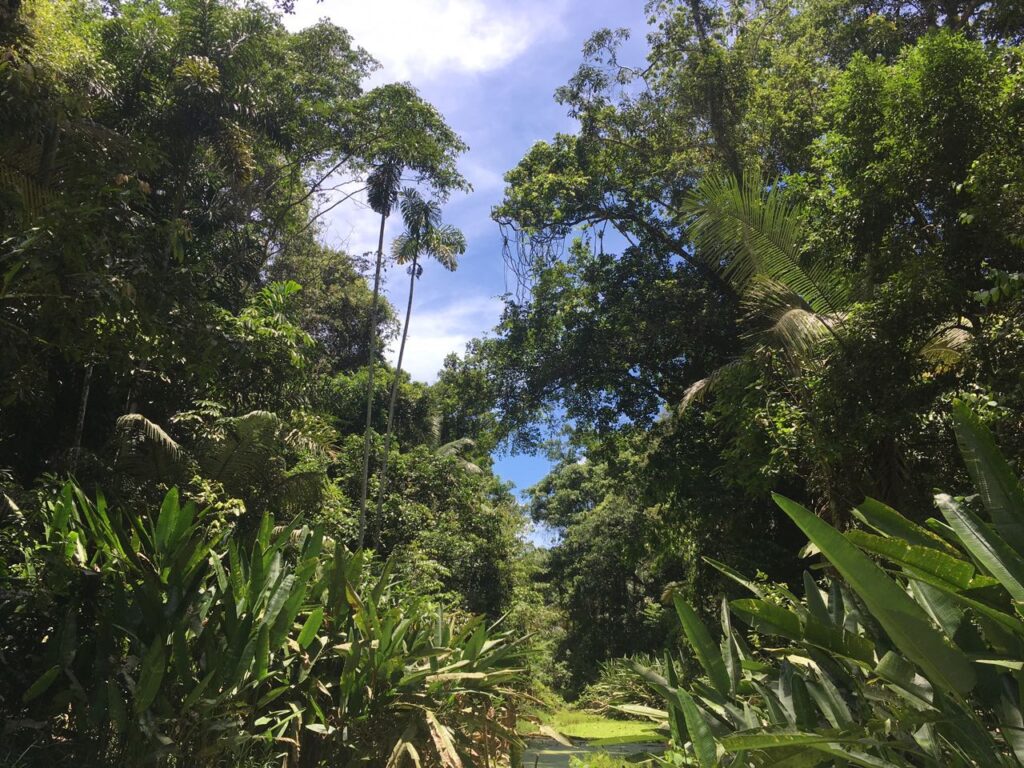
In the north of Bolivia you’ve got the thick and wild Amazon jungle. Most people head to the small village of Rurrenabaque, where you’ll find hostels, restaurants and tour agencies. From there you can book multi-day guided tours deep into the jungle for a raw Amazon experience.
My guide grew up in a tribe in the jungle, without clothes, electricity or any knowledge of the rest of the world. He told us he learned Spanish at 35 years old specifically so he could take people into the jungle. Having someone like that lead you through his home is a completely different experience.
Rurrenabaque is less known than somewhere like Iquitos in the Peruvian Amazon and has lower tourism levels. This means a very raw experience, with crocodiles, monkeys and river dolphins as a fairly standard sighting. If you’re lucky, you might spot a jaguar too.
Salar de Uyuni: The Salt Flats
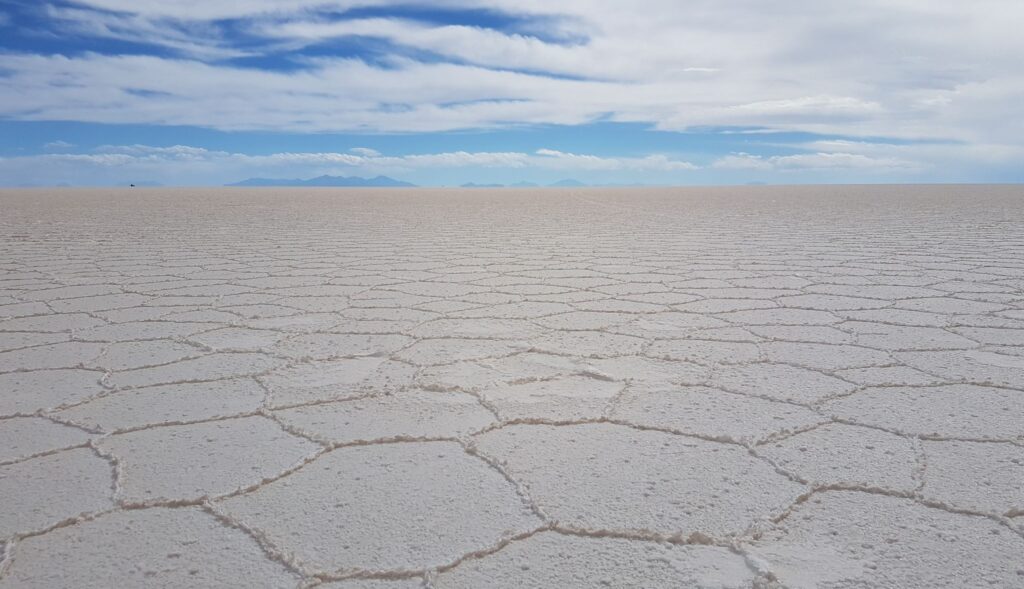
Down in the south the Salar de Uyuni stretches out further than your eyes can see. It’s a very unique attraction with over 10,000 square kilometres of completely flat blinding white salt. In the dry season it looks like you’ve landed on the moon after a heavy snowstorm. In the wet season a thin layer of water floods the whole thing and turns it into a perfect mirror. There will be a reflection of the sky in every direction.
Torotoro National Park
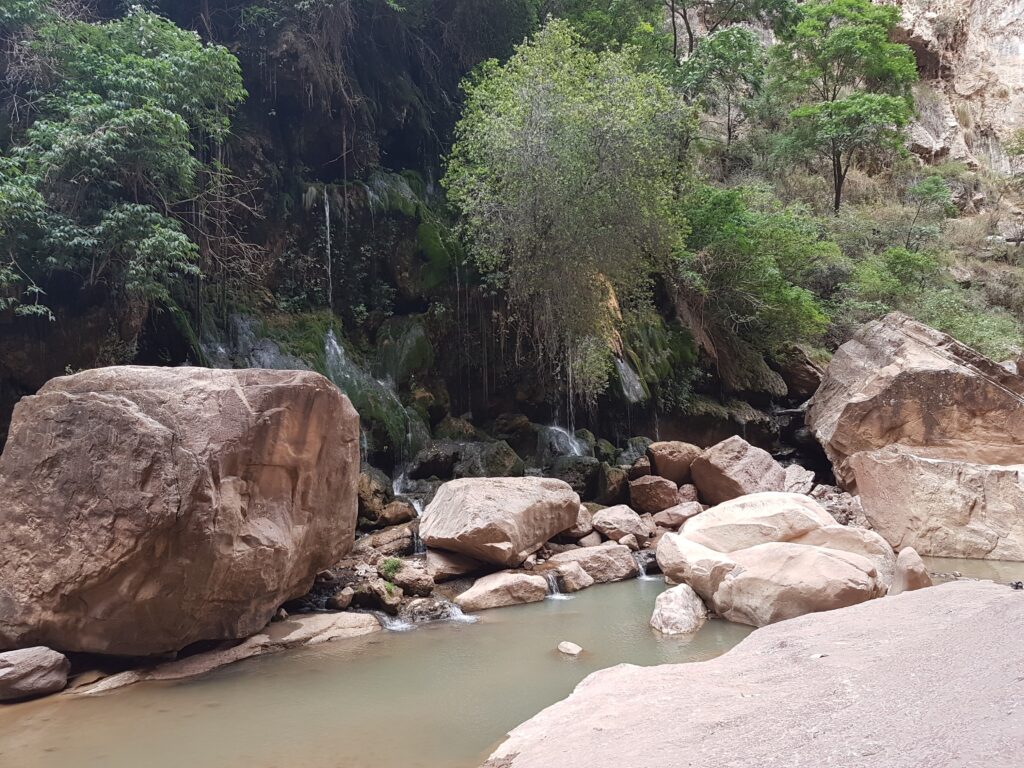
Over in the east Torotoro National Park is hiding dinosaur footprints pressed into the rock. Millions of years ago, the entire region was a flat, swampy lakeshore. Massive dinosaurs walked along the muddy banks, leaving deep prints that hardened over time as sediment covered and protected them. Then, over millions of years, tectonic shifts pushed those ancient lakebeds thousands of metres upward to form the Bolivian Andes. The mountains slowly eroded and the fossilised footprints appeared.
When we were on the bus to the park, I remember thinking that I could picture the dinosaurs roaming around there. The nature was beautifully dramatic and completely untamed. I know now that it didn’t look like this back then, but if they were alive today, I’m convinced they would be living there. The park also has impressive canyons, deep caves and condors circling overhead on the thermals. It’s one of those places that makes you feel very small in the best possible way.
Lake Titicaca
Sitting right on the border with Peru in the west of Bolivia is Lake Titicaca. It is the highest navigable lake in the world at over 3,800 metres above sea level. On the Peruvian side, communities have lived on floating reed islands for centuries. They build their homes and their entire lives on the water.
If you’re planning on going to Peru after Bolivia, make sure to read my Peru itinerary as well.
Best Time for Bolivia Trip
This is one of those questions where the honest answer is: it depends. And I know that’s annoying. My advice is to figure out what matters most before you book anything. Bolivia has two main seasons and which one you pick really does change your experience.
| Main event | Best time to travel |
| Salt Flats (Salar de Uyuni) | Rainy season: In between December and March: Wet salt flats: Mirror effect Bad roads and less accessibility to national parks/jungle |
| Bolivia as a whole: Jungle Trekking / hikes / national parks / cities | Dry Season: In between May and September: The salt flats are drier, but still absolutely worth seeing. Perfect weather for jungle, hikes and other national parks and cities |
The wet season runs from November to April. As the name suggests, it will rain a lot. Some roads will become impassable and getting around takes more patience than usual. The country itself will be harder to travel, but the rain will turn the Salar de Uyuni into a massive mirror. A thin layer of rainwater floods the flats and turns the whole surface into a mirror reflecting the sky.
The dry season runs from May to October when getting around is generally easier. This is the better window for jungle tours, trekking and spending time in the cities. Bolivia never really gets crowded though, also not in their peak season.
Food in Bolivia
There’s a saying that does the rounds among backpackers in Bolivia. “If you didn’t get sick in Bolivia, you didn’t go.” I can confirm that I went. I got full-blown salmonella on a three-day survival tour in the Rurrenabaque jungle. More about that later.
Let me be straight with you. A Bolivia trip is not for the foodies. If you’re the kind of traveller who researches restaurants before booking flights, this might not be your country. If you’re a picky eater, Bolivia will sort that out for you. You will get over yourself very quickly.
First things first — the buses. If you’re travelling by bus in Bolivia, and you will be, accept that you will share your journey with animals. Live ones, dead ones, it doesn’t matter. Both happened to me. At some point I saw the driver strapping dead chickens to the top of our van, with no cooling in the blazing sun. I quietly decided I wouldn’t be eating meat when we got there.
Now the good news. Bolivia is incredibly cheap to eat. The menu del dia (a set meal of soup, rice, beans, chicken, a drink and a dessert) will cost you around $1.50 to $2. It’s not going to blow your mind, but it does the job. Eat where the locals eat and your wallet will thank you.
Most hostels have a kitchen you can use and the local markets are incredible for groceries. Huge, chaotic and full of fresh produce, spices and things you’ve never seen before. Just be prepared: the meat section will have cuts of everything laying out in the open sun without refrigeration and packaging. If that puts you off, and it might, just stick to the vegetables and cook your own food. Always follow the food-rule: Cook it, peel it or leave it.
Salteñas are Bolivia’s filled pastries and they are delicious. They are juicy, slightly spicy and eaten for breakfast standing on the street. If someone offers you a bowl of api (a warm, sweet purple corn drink), say yes. It’s one of those simple things that is so delicious, you will remember it.
Getting sick in Bolivia
It all started in the jungle. I couldn’t hold anything in, while we were on a survival tour, without bedrooms, bathrooms or kitchens. Not exactly ideal conditions for being ill. My guide took one look at me and disappeared into the jungle. Half an hour later he brought me a freshly brewed tea made from river water, tree bark, leaves and whatever else he found out there. The tea helped and I got better quickly.
The real deal started when I stopped with the teas, when we got back to La Paz. At the hostel I found a small group of people who’d just returned from Rurrenabaque with exactly the same complaints. They’d been to a doctor, been diagnosed with salmonella and put on antibiotics. I went to the same doctor and told him that this had started five days ago in the jungle.
He looked quite surprised and said that by now I should be severely dehydrated and almost certainly hospitalised. He had never heard of the jungle medicine my guide had given me. He gave me antibiotics anyway and within a week I was fine.
I don’t know what was in that tea, but I would really love to know. Somewhere in the Bolivian Amazon there is a guide, called Jimmy, who knows things that doctors don’t. And I love that I got to see that for 4 days.
Bolivia Travel Around
Most people get around during their Bolivia trip by bus because it’s cheap, gets you almost everywhere and most of the time you’ll arrive safely. Most of the time at least.
Don’t be surprised if your bus simply doesn’t show up. Or breaks down somewhere in the middle of nowhere with no phone signal and nothing passing for what feels like forever. This happened to us and you will just have to wait. Eventually another bus rattles past with a couple of spare seats and squeezes you in. By the next day you’re laughing about it over breakfast. Bolivia has a very effective way of teaching you that things will work out, just not on any schedule you had in mind.
The roads are part of the adventure whether you like it or not. Some are perfectly fine and you’ll wonder what everyone was worried about. Others are unpaved tracks cut into the side of a mountain with a drop on one side that you’ll try to ignore.
The Death Road near La Paz (properly called Yungas Road) was once named the most dangerous road in the world. Most traffic now uses a newer safer route, but the original is still there and has somehow become one of the most popular cycling tours in the country.
For longer stretches domestic flights are worth looking into. Some bus journeys in Bolivia run to 12, 15 or even 20 hours across this enormous country. If you’re short on time, flying is sometimes your best bet. If you have the time, take the bus every single time. You’ll see more, meet many warm people and come home with far better stories.
Safety Tips During Bolivia Trip
Bolivia felt like one of the safest countries I travelled through in South America. Outside of La Paz, I never once felt threatened or uneasy. People are warm, curious and genuinely helpful. Random strangers helped us find bus stops, shared food on long journeys and looked out for us in a very heartwarming way.
Safety in La Paz
La Paz is a different story. When we arrived at our hostel, before we’d even dropped our bags, the receptionist sat us down for a talk. Not the usual “here’s the WiFi password” talk, but a proper, serious talk. The kind where you put your phone down and actually listen.
The number one rule: never get into an unmarked taxi. Only ever use radio taxis, which are the ones with a company name, a phone number and a lit sign on the roof. If it doesn’t have those things, don’t get in. It doesn’t matter how tired you are, how late it is or how much cheaper it is. You don’t get in.
The reason is something called express kidnapping. Fake taxis in La Paz have been used to rob passengers at knifepoint, force them to withdraw money from ATMs and in some cases worse. It sounds extreme, but unfortunately it isn’t rare. Every hostel in La Paz will tell you the same thing and everyone who knows La Paz will back it up. This is a rule you will not want to break.
Beyond that the usual common sense applies. Don’t walk alone at night in unfamiliar areas and keep your valuables out of sight. Don’t flash expensive cameras or phones in busy markets and trust your gut. If a situation feels off, just walk away.
Please don’t let this put you off Bolivia. In my experience, Bolivia was an incredible, safe and welcoming country. But I caught myself separating La Paz from the rest of it almost immediately. If safety is a genuine concern for you, you should skip La Paz and see every other part of Bolivia. If you’re going to La Paz, I recommend going in with your eyes wide open, while following all the rules for safe travelling.
Conclusion: Book your Bolivia Trip
Go. Seriously. Just go.
Bolivia will be an experience with almost certain ups and downs. Prepare for the altitude, the dodgy buses, the meat sitting in the sun and the stomach situation that may or may not be coming for you at some point. Throw away your comfort zone and a Bolivia trip will hand you an adventure you signed up for by booking your ticket. That is exactly why it’s worth every single second of getting there.
I’ve been to over 30 countries, seen a lot of beautiful places and had more than my share of incredible experiences. Bolivia still sits at the top, not because it’s easy, but because it’s real in a way that very few places left on this earth still are. The nature will impress you, the culture will surprise you and the people will restore your faith in humanity.
Give yourself proper time to acclimatise and don’t rush the altitude, because your body will make you regret that decision. If you only have ten days, honestly, you’re better off spending them somewhere else. Bolivia is too vast and too beautiful for a flying visit. By the time your body has finally adjusted you’ll already be packing your bag to leave. That’s just not the way this country deserves to be experienced. Give this trip a minimum of three to four weeks.
If time is short go to Peru instead. It’s more accessible, better set up for shorter trips and there are incredible things to see. Not as raw and real as Bolivia in my opinion. But within ten days you’ll get so much more out of it.